
A recent comment asked why Lent 5 (this coming Sunday), the Sunday before Palm Sunday, was previously called “Passion Sunday”. Was there at some stage of Christian history a reading of the Passion on this day? The Church of England continues to call this “Passion Sunday”. The NZ Lectionary also calls this “Passion Sunday” and the (now-nearly-never-used- does-anyone-at-all-still-us-it?) NZ home-grown “Two Year Series” of readings also calls Lent 5 “Passion Sunday” (with the theme “the cross”) NZPB page 579. I have looked in some books, looked around online, and tweeted the question, but have not received what I regard as a sufficient explanation. Personally, I’m with the renewed lectionary that sees Palm Sunday as Passion Sunday and each year has a different reading of the passion story on Palm/Passion Sunday. This aside, in this post I’m more interested in the history of calling Lent 5 “Passion Sunday”. Please add in the comments what you know.

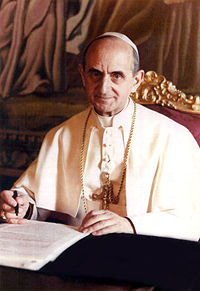
Passion Sunday is the classical designation for the Fifth Sunday of Lent. Under the pre-Vatican II calendar it marked another intensification of the Lenten period. I don’t believe that Isidore of Seville refers to it in his De Ecclesiasticus Officiis but Amalarius of Metz devotes a short chapter to it in his (4.20) where he says right out, “Dies passionis Domini computantur duabus hebdomadibus ante pascha Domini. (The days of the Passion of the Lord are reckoned as the two weeks before the Pasch of the Lord)”
Aelfric of Eynsham says basically the same thing writing a couple of centuries later: “Þeos tid fram ðisum andwerdan dæge oð ða halgan eastertide is gecweden cristes ðrowung tid. (This time from the present day [the Fifth Sunday in Lent] until the holy Easter-tide is called Christ’s Passion-tide.)”
So, yes, it’s a well-documented feature of the historic Western liturgy. Oddly enough, the main lectionary reading for the day appears to have been John 8:46-59 so the reference isn’t to the reading of the Passion on that day but rather a direct liturgical turning towards the passion as the Antiphons, responsaries and finally readings begin building up the conflict and moving to the events of Holy Week and Triduum.
Hope that helps…
I thought it was because the deficit in chocolate was causing a surfeit in desire …
In the Roman Catholic Liturgy we do read the passion on Passion Sunday. It’s more popularly known as Palm Sunday because the liturgy begins with the blessing of palm or other branches, followed by the reading of the narrative of the entry of Jesus into Jerusalem in the last wseek of his mortal life. Then, usually, there is a procession from the place where the blessing took place to the church proper. “Passiontide” has begin. The gospel during Mass is the account of the Passion as found in the gosppel being read that year. In 2010 we are reading the gospel according to Luke. Happy Easter!
Thanks, Phil, for your contribution, but I think you have misread the post. Most of us, not just Roman Catholics, are reading the Passion on Lent 6 = Passion/Palm Sunday and this year from Luke. Prior to Vatican II it was Lent 5, as the post explains, that was called “Passion Sunday” – the question was: why?
Well the 5th Sunday of Lent marks the beginning or the period called “Passiontide…” not Passion Sunday. As some might remember statues wyere covered in the church as a “Fast” of the eyes. The concentration is shifted to the events that lead to the Lord’s entry into Jerusalem and his betrayal, trial and crucifixion. Palm Sunday of the Lord’s Passion is celebrated with both the the triumphant entry and the passion narrative. This is done to show the direct relationship of the entry to the passion – shouts of Hosanna become shouts of Crucify! In an ideal world if people would attend the full Passion event. Holy Thursday, Good Friday -Vigil and Easter, perhaps reading the Passion on Palm Sunday would not be needed -but…..it should be clear between Sundays of Palm (Passion) Sunday and Easter that there was a last supper, betrayal, trial and crucifixion -otherwise what would be celebrated would be Jesus riding a donkey into Jerusalem and then rising. That really does not preserve the unity of events of the passion. Passiontide is two weeks before Easter as we move from concentration on Penance to the events leading to Jesus entering the Holy City.
You are wrong and if you are not sure about a question you should refrain from putting your own opinion or guesses. Passion sunday is the name designated to the 5th sunday of lent which marks the beginning of Passiontide. Just because the reading of the passion is read on the following 6th sunday of lent , Palm sunday, does not mean that passion sunday is that day. They are two separate Sundays with different titles because they are different events. Pick up a Catholic calender.
Thanks, Miguel. In the Roman Rite, Pope Paul VI’s revision in 1969 removed Passion Sunday and Passiontide as starting on the Fifth Sunday of Lent. The 6th Sunday of Lent is now called “Palm Sunday of the Passion of the Lord”. You might see that abbreviated on a calendar as “Passion Sunday” (eg here). If you are seeing “Passion Sunday” on a calendar for the 5th Sunday of Lent, you are not looking at one that follows the Ordinary Form of the Roman Rite. From today (Monday 5th Week of Lent) that Ordinary Form does have the Passion of the Lord as its preface. I hope that helps. Blessings.
I think the answer to the question of understanding the passion sunday with the palm sunday must have had some politics with the popes of pre 60s and post 60s.which is not clear. why all this confusion.
Here is a link to an ebook which provides a concise explanation for Passion Sunday, and Passiontide. Please read into this chapter the notion that this particular Sunday of the year serves as a Sunday addition to Good Friday.
[edited so the link clicks straight from this comment (I hope) – Bosco]
For a Youth Quiz I am wondering how to explain why we use the word Passion (not because of reading The Passion) but why call it Passion…..I think it means because of the great love Jesus had for us…i.e Passion often does refer to great love….any other simple explanations?
Yes, Mona, any good dictionary should indicate there’s a variety of uses of “passion”, love being one of them. It comes from French from Church Latin passiō suffering, from Latin patī to suffer.
Why the change? Passion Sunday precedes Palm Sunday in the Anglican Church as we dont constantly juggle feast days. Passion Sunday has always beeen distinctive from Palm Sunday as it has been down through the centuries and for good cause. Passion Sunday directs our reflection on the Passion of Christ from his 40 days in the wilderness to his death on the cross. Passion for his people, the passion of love, and the passion of suffering at his torture and crucifixion. Palm Sunday celebrates his triumphal entry into the Holy City
Thanks – I have been thinking about doing another blog post on this this week. Most Anglican Churches I know read the Passion on Lent 6, not on Lent 5. Yes, one can find associations between the lectionary and the Passion on Lent 5 – one can on any Sunday. Blessings.
Am I alone in deeply regretting the dropping of the capital aitch when referring to God or Jesus-likewise His, Thee Thou etc. On enquiring the reason from the C of E I was told it reflected modern publishing. What a poor excuse- it merely serves to bring Him down to our miserable level.
I totally agree with the complete lack of respect towards Him any more. It is most sad.
Nora, you are not the only one, and you are quite right. The dropping of traditional,
respectful capitals in written reference to Our Lord irks me very much.
I have never heard of Passion Sunday. I’m not Anglican or Catholic, but Lutheran, so that might be why. There wasn’t any kind of Sunday designation until Palm Sunday in our liturgical year, or at least, not in our services. I am no help in that regard. Palm Sunday is “just” Palm Sunday, too–not Passion/Palm Sunday. The Passion is saved for Maundy Thursday and Good Friday. I guess that’s what happens when you grow up in a Haugean Lutheran church.
Thanks, Heidi. It is so helpful to get wider perspectives. Blessings.
Brought up in the Salvation Army , we didn’t recognise Passion Sunday either.
Lent was called Self Denial.
I am now confirmed C of E but struggling with the differences between Christian denominations .
Another subject for us to trash out perhaps?
I there’s a nice explaination of the captital H thing in the prologue of the ESV, but for what it’s worth my ha’penny-worth on the subject is at revteapot.wordpress.com
I used to be fascinated by the Tridentine Rite, and until 1970 in the Roman Catholic Church, the Fifth Sunday of Lent was Passion Sunday, and the Sixth was celebrated as Palm Sunday. I did some digging to find the old Lectionary to find some clues as to why, but I didn’t find much helpful other than the Epistle. Hmmm. I’m curious. Usually something in the Introit clues the seeker of knowledge in http://catholic-resources.org/Lectionary/Roman_Missal.htm
Most churches I have been involved with tend to alternate year by year. So lent 6 is Passion this year, Palm next and so on…
I don’t know if that’s right, but it’s what we do!
I think as a way of laying emphasis, that may be very useful. So this year the emphasis is on Luke’s Passion, next year on Matthew’s Palm story; then Mark’s Passion; then Luke’s Palm story; then Matthew’s Passion; then Mark’s Palm story – a six year cycle of emphasis. Blessings.
Lent changes emphasis here, from penitence to contemplation of the passion. Still observable in the Roman offices to some extent, it was much more marked in the middle ages. Some churches still veil images from today; the Sarum rite used a different colour I think: murrey (a muddy red/maroon); the ‘Glory be’ was ommitted after the Psalms…
I think the answer lies not in a Passion Gospel (traditionally read Matthew on Palm Sunday, Mark on Tuesday, Luke on Wednesday, and John on Good Friday), but in the start of Passiontide, when the overall theme of the liturgy turns from the penitence of the last four weeks to look towards the Cross. A clear example of this is in the office hymns: from today, Mattins and Lauds have Venantius’ Pange lingua gloriosi prælium certaminis in two parts, and Vespers Vexilla Regis prodeunt, both Cross-themed, as is the Sarum Compline hymn, Culto Dei memento.
Trying to find out today – on the Eve of what I thought Passion Sunday was & came across this string of posts. In our UK village in my childhood, the chant was “Mothering Sunday, Passion Sunday, Palm Sunday, Easter Sunday!” as a way of drilling the calendar into us. Lots of lovely legends about Mothering Sunday that haven’t much to do with the Church, Palm & Easter, yes, fine, but never did understand “Passion” – thanks for all the above theories (even if my church lore is so sadly lacking was only able to follow a tenth of it!).
Vol VIII of The New Interpreter’s Bible on Matthew’s gospel suggests, “One might assume from the English meaning of the word that this is because the story deals with intense feeling, but passion in this context is related to the word passive. …Jesus is not active but passive; he does not act but is not acted upon. He does not “die” but is killed, does not “rise” but is raised….human beings are the actors on the surface of the narrative, and God is the hidden actor behind the scenes; in the resurrection God alone is the actor” page 459.
If I remember rightly Vanstone in The Stature of Waiting argues that all the verbs about Jesus turn from active to passive ones. He no longer does, he is done to. A Greek expert can confirm or deny.
Andrew Tyler, Norwich, UK, xatyler@aol.com
One has to wonder why changes are made in the churches days of celebration. Passion Sunday is NOT Palm Sunday and never was. Is this just another way of introducing “modernism” into the church? Our Lord certainly does not need for us miserable humans to dictate how we should worship Him. Its all spelled out in the Holy Bible
Thanks, William. You may need to expand your point to make it clearer. On the Sunday before Easter Day, the Roman Rite celebrates “Palm Sunday of the Passion of the Lord” – it does so with the reading of one of the synoptic passion accounts, rotated year by year. I’m not following your points about modernism and so forth. Blessings.
Thanks Bosco, I have found PASSION Sunday’s meaning. Blessing for your wonderful site ruth
IT IS PAINFULLY OBVIOUS THAT modernism has crept into the church, just look at Vatican 2! IN THE RC CHURCH THE PRIEST NO LONGER FACES THE ALTAR, THERE IS NO LAST GOSPEL AND THE HOLY DAYS ARE DISPLACED. IF YOU CANNOT SEE “MODERNISM” IN ALL OF THIS THEN YOUR ARE RELIGIOUSLY BLIND